
SS-31 10 mg or 50 mg Vials: Why Are Buyers Confused About Vial Size, Concentration, and Kit Cost?
In this article
As the focus on cellular vitality and mitochondrial health intensifies, SS-31 (Elamipretide) has become one of the most sought-after research peptides on the market. However, a quick glance at online research communities and buyer forums reveals a recurring hurdle: deep confusion regarding vial sizes, reconstitution concentrations, and purchasing economics.
Questions like "Should I buy the 10mg or 50mg?", "How does adding 2ml vs. 3ml of diluent change things?", and "Why is a single 50mg vial $139 when kits seem cheaper?" are everywhere.
Whether you are a clinic owner, a peptide reseller, or an independent researcher, understanding these parameters is crucial for optimizing your budget and standardizing your research. Here, Meropep—your trusted partner in Cellular Vitality & Mitochondrial Research Peptides—breaks down the math and the market.
The Core Confusion: Physical Vial Size vs. Peptide Mass
The most common point of confusion is conflating the physical size of the glass vial with the actual mass of the peptide inside.
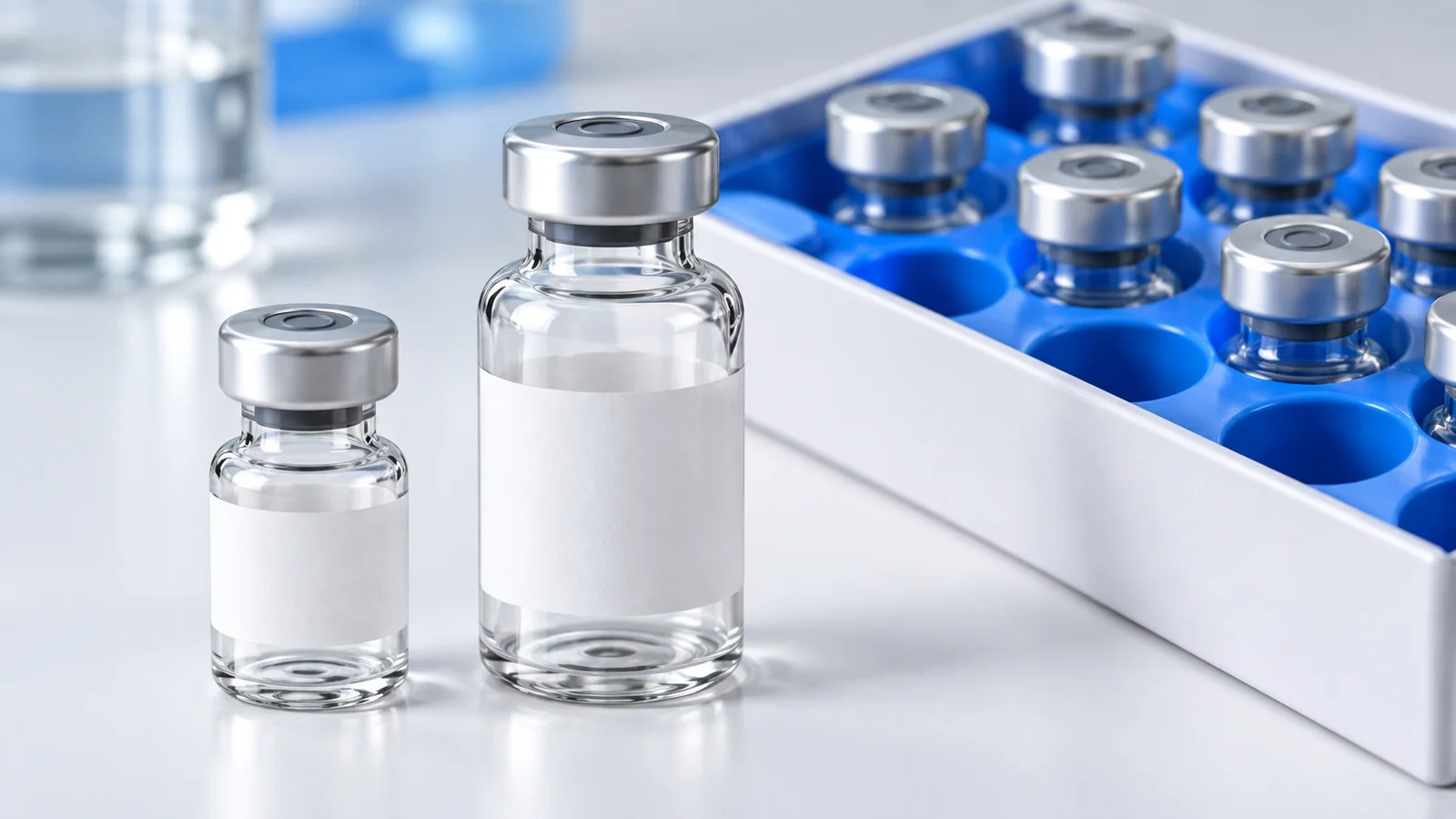
When you purchase SS-31, you are buying a specific mass of lyophilized (freeze-dried) powder—typically 10 mg or 50 mg. However, manufacturers often use standard 2 mL or 3 mL glass vials to house both quantities. To the naked eye, a 10 mg puck of freeze-dried powder might look almost identical to a 50 mg puck within the same 3 mL glass vial.
The takeaway: Do not judge the product by the size of the glass container. The label indicating 10 mg or 50 mg dictates the total raw material you have to work with.
Reconstitution Math: Calculating True Concentration
Another major point of discussion in biohacking and research forums is how much bacteriostatic water to add. Researchers frequently ask whether they should use 1 ml, 2 ml, or 3 ml of diluent.
The volume of diluent you choose does not change the total amount of SS-31; it only changes the concentration (measured in mg/mL). Understanding this equation is vital for accurate research measurements:
Formula: Total Peptide Mass (mg) ÷ Volume of Diluent (mL) = Concentration (mg/mL)
- With a 10 mg Vial:
- Adding 1 mL of diluent = 10 mg/mL concentration.
- Adding 2 mL of diluent = 5 mg/mL concentration.
- With a 50 mg Vial:
- Adding 2 mL of diluent = 25 mg/mL concentration.
- Adding 2.5 mL of diluent = 20 mg/mL concentration.
Higher concentrations (like those easily achieved with a 50 mg vial) mean less liquid is required per research application, which can be advantageous depending on your study design.
Kit Cost vs. Single Vials: The Economics of Peptide Sourcing
Recently, researchers noted finding single 50mg vials of SS-31 priced around $139, sparking debates on how many vials are needed for comprehensive research projects. As one seasoned buyer noted, "You need to find a vendor selling by the kit (10 vials) or you're going to spend an absolute fortune."
They are absolutely correct. The peptide industry heavily incentivizes bulk and kit purchasing. Here is why buying 10-vial kits is the industry standard for clinics, resellers, and serious researchers:
- Price Per Milligram: Evaluating cost by "price per mg" rather than "price per vial" reveals the true value. A single 50mg vial at $139 equals $2.78 per mg. Purchasing a 10-vial kit of 10mg (100mg total) or 50mg (500mg total) drastically reduces this per-milligram cost, protecting your profit margins or research budget.
- Batch Consistency: Research requires consistency. Buying a full kit ensures all vials come from the same synthesis batch, minimizing variables in your studies.
- Scalability: For clinics and medspas, stocking 10-vial kits allows for seamless inventory management and better profit structures.
For businesses looking to scale, Meropep offers comprehensive Wholesale & Private Label programs to help you build your own brand with premium, cost-effective kits.
Expanding Mitochondrial Research: The Synergistic Stack
While SS-31 is a powerhouse for targeting the inner mitochondrial membrane and reducing oxidative stress, mitochondrial research often involves synergistic peptide protocols. Researchers frequently pair SS-31 with other cellular vitality peptides to observe compounding effects:
- MOTS-c: A mitochondrial-derived peptide known for regulating metabolic functions and insulin sensitivity.
- NAD+: The essential coenzyme for cellular energy production and mitochondrial function.
- Epithalon: Widely researched for its role in telomerase activation and cellular longevity.
Why Choose Meropep?
At Meropep, we eliminate the guesswork. Whether you need 10 mg kits for standard distribution or high-density 50 mg vials for specialized research, we guarantee purity and transparency.
- Strict Quality Control: Our peptides undergo rigorous Quality Control testing.
- Verified COAs: You can always Verify our COA for third-party proof of purity and mass.
- Bespoke Solutions: Need a different vial size or sequence? Explore our Custom Peptide Synthesis services.
Ready to source premium SS-31 for your clinic or lab? Browse our full Product Catalog, or if you are ready to secure bulk pricing, Request a Quote today. For immediate assistance, connect with us via our Sales Chat or visit our Contact Page.