
When SS-31 Looks Frozen in the Refrigerator: Why Photos, Cold Temperatures, and Formulation Anomalies Defy Simple Visual Inspection
In this article
For clinic operators, med-spa directors, independent resellers, and academic researchers handling mitochondrial targeting compounds, the cold chain is a constant focal point of quality assurance. Yet, physical inspection frequently triggers unnecessary panic. A recent inquiry on community forums highlighted a common point of confusion when handling reconstituted vials under refrigeration: "It is just frozen, right? What is my RS even looking at?"
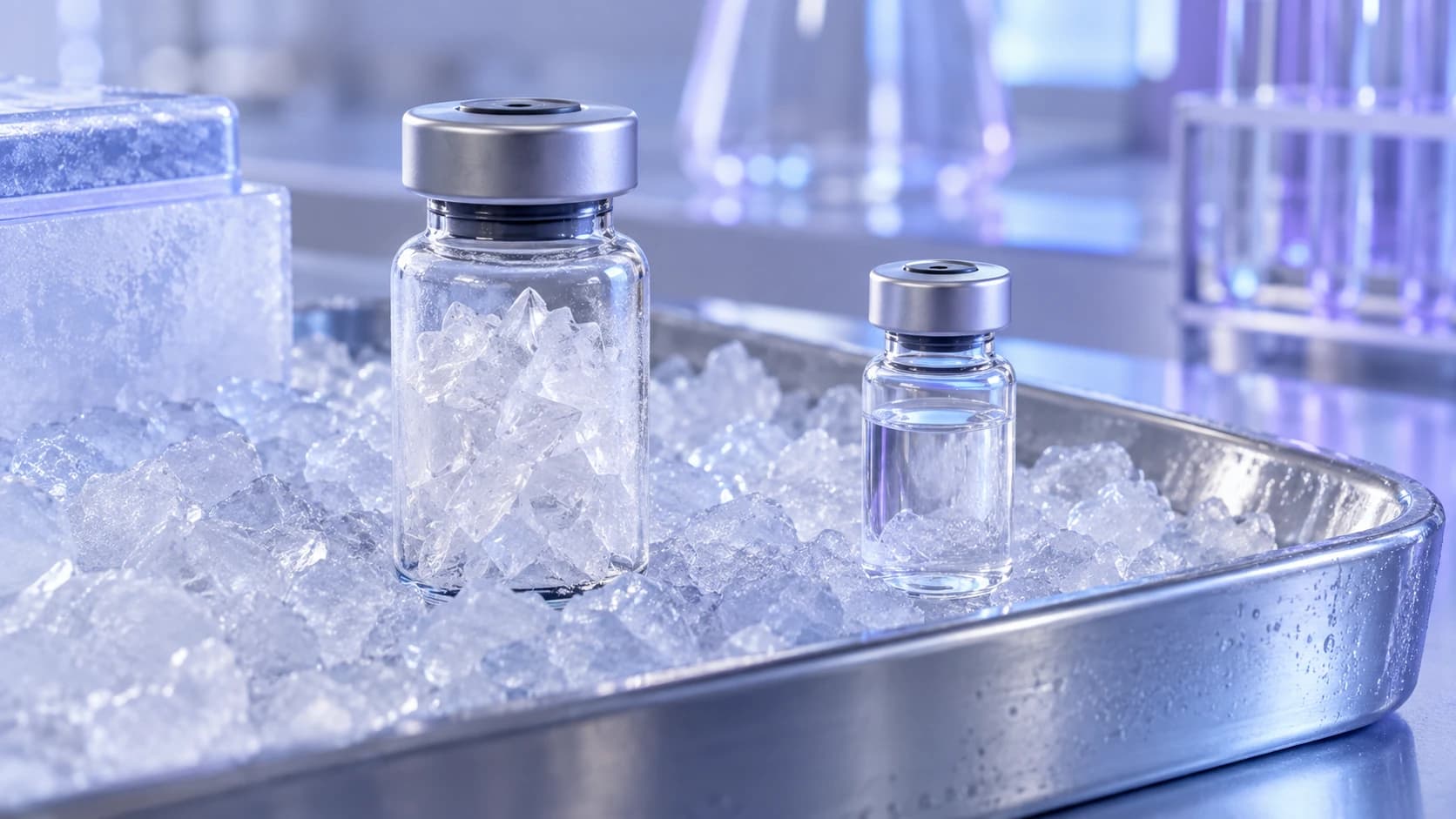
This observation reflects a widespread misconception across peptide handling circles: the assumption that visual states—such as a dense look, a thick consistency, or apparent crystal formation in a standard 2°C to 6°C refrigerator—can instantly confirm whether a compound is preserved, frozen solid, or structurally compromised. In peptide logistics and laboratory oversight, relying solely on a smartphone snapshot or a quick glance through the glass is a recipe for false conclusions.
The Physics of Cold Storage: Temperature vs. State
When a reconstituted vial of SS-31 (elamipretide) sits in a refrigeration unit, its physical appearance can occasionally mimic freezing even when the internal temperature remains strictly above the freezing threshold.
- The Refrigerator Gradient: Standard medical and laboratory refrigerators frequently experience micro-fluctuations. A unit set to 2°C can dip near 0°C adjacent to cooling plates, while maintaining 4°C to 6°C on the door shelves.
- Aqueous Phase Behavior: Bacteriostatic water solutions containing low-molecular-weight synthetic tetrapeptides possess freezing points that shift based on solute concentration and buffer interactions. However, optical density changes are often mistaken for ice formation.
- Micro-Crystallization vs. Freezing: Localized shifts in solubility can cause micro-precipitation or structural reorganization without the entire vial turning into a solid ice block.
As documented in handling guidelines, once a peptide is reconstituted with bacteriostatic water, it requires consistent storage at 2°C to 8°C and should not be subjected to deep freezing, which disrupts delicate spatial arrangements. Mistaking a minor visual density shift for a "solid freeze" often leads handlers to mishandle the material.
Why Visual Inspection Fails: Beyond the Photograph
In the modern supply chain, buyers frequently snap a photo of a vial and transmit it across chat apps or forums demanding an immediate verdict. This practice ignores several fundamental biochemical realities:
- Lighting and Refraction: Clear glass vials, curved meniscus lines, and condensation patterns create optical illusions. A perfectly homogeneous solution can appear cloudy, stratified, or "frozen" depending on backlighting angles.
- Excipient and Buffer Variances: Lyophilization cakes contain varying residual moisture levels and salts. Upon reconstitution, minor variations in local pH or ionic strength can alter refractive indices, making the liquid look dense or particulate-heavy to an untrained eye.
- The Photo Distortion Trap: Cameras capture light artifacts, not molecular integrity. A pristine, high-purity batch can look flawed under harsh flash photography, while a degraded sample can look completely clear.
Swipe or scroll to compare all columns.
| Inspection Method | What It Measures | Limitations & Vulnerabilities |
|---|---|---|
| Visual Smartphone Photo | Surface light reflection and container silhouette | Highly subjective; distorted by condensation, glass curvature, and lighting angle. Cannot detect purity or oxidation. |
| Manual Agitation Check | Fluid viscosity and immediate macroscopic chunks | Can induce mechanical stress or foaming if handled improperly; fails to reveal microscopic conformational shifts. |
| Batch Certificate of Analysis (COA) | Quantitative purity via HPLC and mass spectrometry | Relies on verified supply chain documentation; provides objective analytical benchmarks rather than subjective guesses. |
Navigating Verification Protocol: Moving Past the Snapshot
When researchers or procurement managers encounter an ambiguous visual state in a cold-storage unit, guessing or attempting improvised thermal modifications introduces severe experimental variables. Standard laboratory governance dictates a structured path:
- Verify the Hardware Environment: Instead of staring at the vial, check independent minimum-maximum data loggers within the refrigeration unit to confirm whether actual temperatures breached critical thresholds.
- Consult the Analytical Documentation: Visual anomalies must always be cross-referenced against baseline technical documentation. True quality validation relies on objective metrics rather than visual intuition.
- Maintain Chain of Custody: Sourcing material from verified synthesis channels ensures that batch consistency is backed by rigorous analytical testing rather than guesswork.
To explore detailed specifications, review analytical profiles, or evaluate material readiness for your upcoming work, consult our primary portal and verification tools:
- Review the core specifications at the SS-31 Product Page.
- Explore background research and handling frameworks at the SS-31 Research Center.
- Cross-reference batch metrics via the COA Verification Portal.
- Connect with our logistics team for current batch availability and documentation through the Request a Quote Portal. (Note: Inventory status, analytical purity benchmarks, and shipping timelines for active batches should always be confirmed directly with sales).