
Why Is Your SS-31 Solution Cloudy? (And Why Clarity Doesn’t Guarantee Quality)
In this article
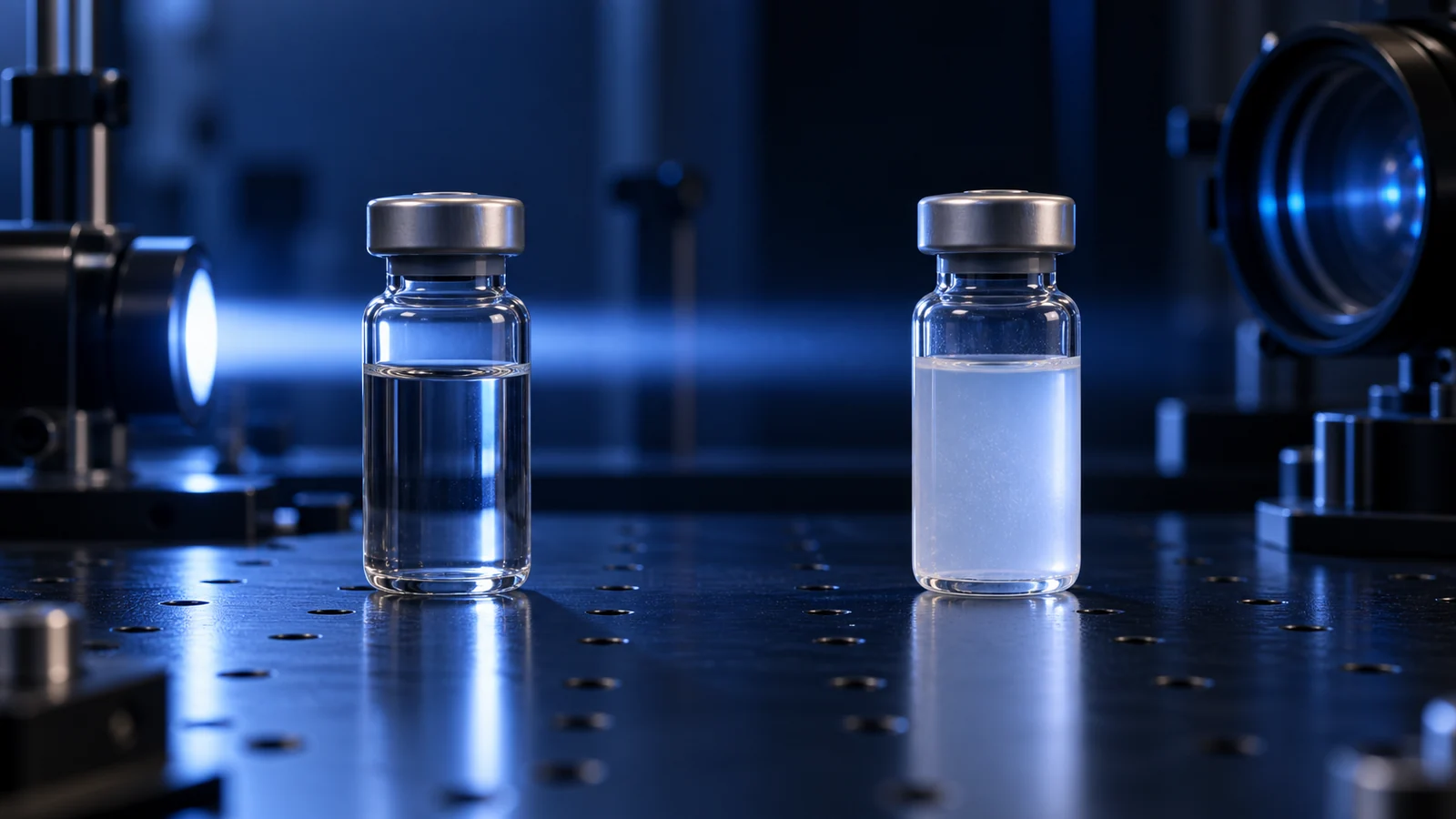
Recent discussions among biohackers and researchers have highlighted a common issue: reconstituting 50mg vials of SS-31 sometimes results in a cloudy or foggy solution. Observers have noted that while some mixtures clear up overnight or after being pushed through a syringe filter, others remain persistently murky. For professionals at clinics, research labs, and dedicated buyers, understanding the science behind this phenomenon is critical.
As a leader in Cellular Vitality & Mitochondrial Research Peptides, Meropep provides this guide to explain why SS-31 solutions become cloudy and how to evaluate true product quality.
Causes of a Cloudy SS-31 Solution
Turbidity (cloudiness) in a reconstituted peptide is a physical reaction, not an immediate indicator of authenticity. Several factors can cause lyophilized SS-31 to resist complete dissolution:
- Solvent pH and Buffering: Peptides have an isoelectric point where their solubility is lowest. If the bacteriostatic water (BAC) used has an incompatible pH level, the peptide will not dissolve completely, leading to a foggy appearance.
- Concentration Saturation: Attempting to dissolve a large amount of peptide (e.g., 50mg) in a very small volume of diluent can exceed the solubility limit of the liquid, causing the excess powder to remain suspended.
- Synthesis Byproducts: Lower-tier manufacturing can leave behind heavy salts, residual solvents, or cleaved protecting groups. These impurities often have poor solubility in water and create a cloudy suspension upon mixing.
- Lyophilization Environment: If the freeze-drying process lacks strict environmental controls, excess moisture or temperature fluctuations can alter the physical structure of the peptide cake, making it difficult to reconstitute later.
Does a Clear Solution Establish Quality?
A common misconception is that if a foggy peptide solution becomes clear—either by adding more water, waiting overnight, or using a micron filter—the product is safe and pure. This is fundamentally false.
Clarity only confirms that the solid particles have dissolved or been physically removed from the liquid; it does not verify the chemical integrity of the peptide. A clear solution can still contain degraded peptide chains, incorrect amino acid sequences, or dangerous, water-soluble impurities. Conversely, filtering a cloudy solution might simply strip away the active peptide itself if it crashed out of the solution, leaving you with nothing but expensive water.
Verifying True Peptide Quality
Visual inspection is never a substitute for analytical chemistry. To ensure you are researching with high-grade, bio-identical peptides, you must rely on objective data rather than liquid clarity.
- High-Performance Liquid Chromatography (HPLC): This test separates the components of a mixture to confirm that the peptide is highly pure (typically >99%) and free from significant synthesis fragments.
- Mass Spectrometry (MS): This verifies the exact molecular weight of the peptide, confirming that the correct amino acid sequence was synthesized without missing or extra bonds.
- Independent COA Verification: Always check the Certificate of Analysis for your specific batch to ensure third-party validation.
The Meropep Commitment
At Meropep, we prioritize rigorous Quality Control for all our cellular vitality products. Whether you are researching SS-31 for mitochondrial optimization, exploring MOTS-c, or investigating NAD+, you deserve transparent data, not guesswork.
Ready to upgrade your inventory with verifiable, lab-tested research peptides? Request a Quote today to secure premium compounds for your clinic, lab, or personal research.